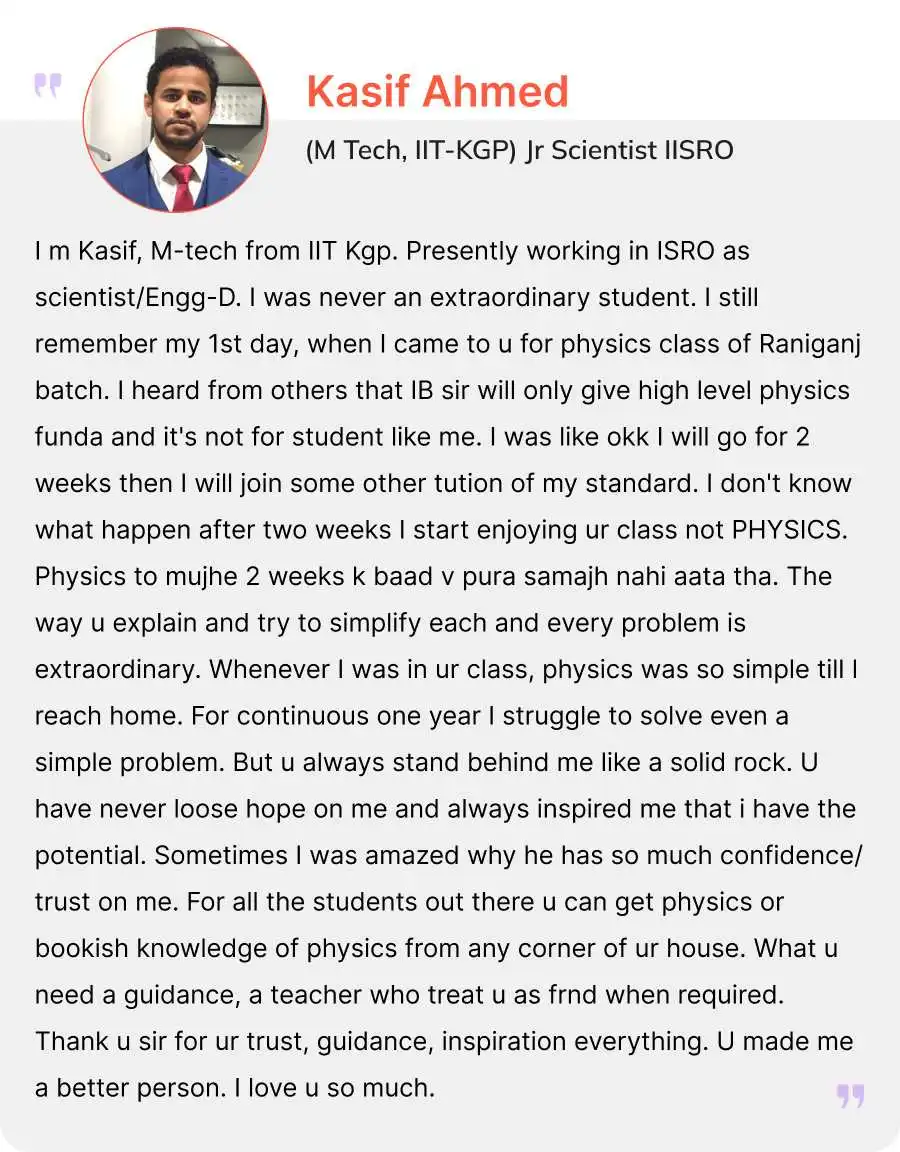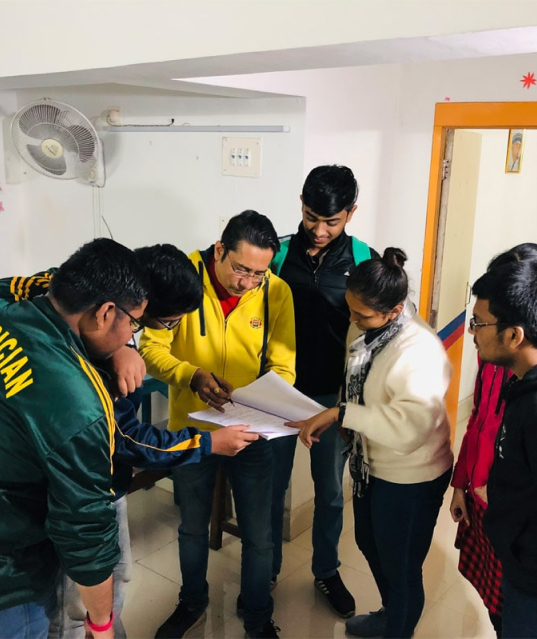
Physics is often seen as a difficult subject for school exams and JEE preparation. When students transition from ICSE or CBSE to JEE preparation, the subject starts demanding a different way of thinking.
Gaps between board-level concepts and JEE-style applications become noticeable, leading to confusion during the early stages of preparation.
This blog breaks down why that shift feels difficult and highlights common mistakes made during the transition. It also explains practical ways to strengthen fundamentals, study smarter, manage time better, and improve problem-solving skills.
Understanding the Challenge: Why JEE Physics Feels So Different
Here is a short explanation of how JEE Physics feels different:
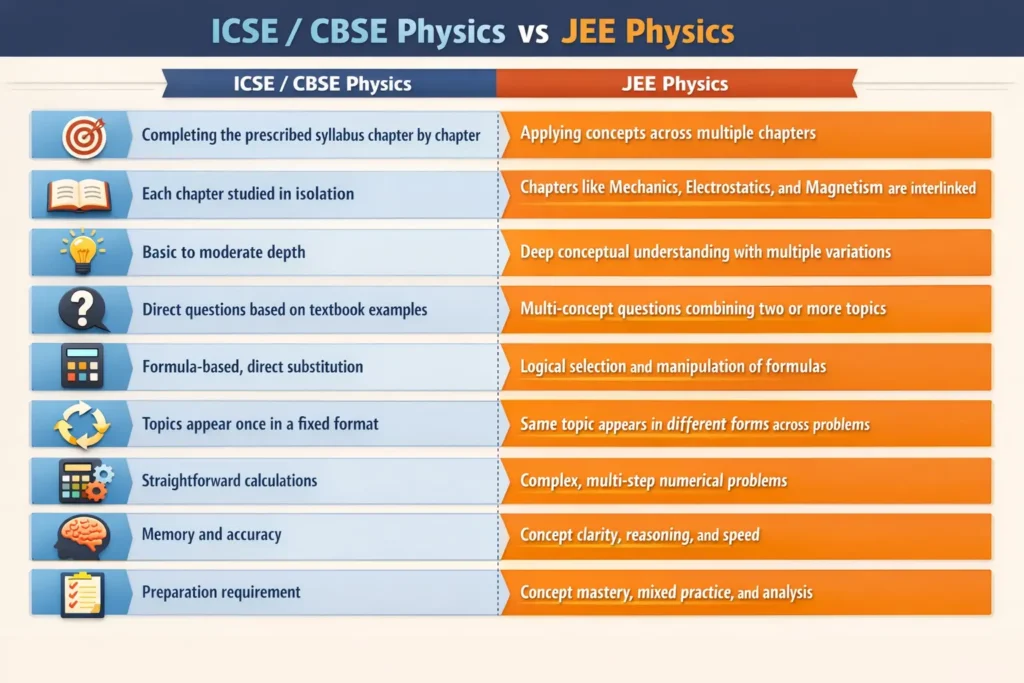
Students coming from ICSE or CBSE are usually comfortable with structured questions and predictable exam patterns. JEE Physics breaks this comfort zone by testing concepts across chapters, often in unexpected combinations. This shift can feel sudden and intimidating without proper guidance.
Let’s know how to bridge the gap between ICSE and JEE physics faster:
Step 1: Master the Fundamentals
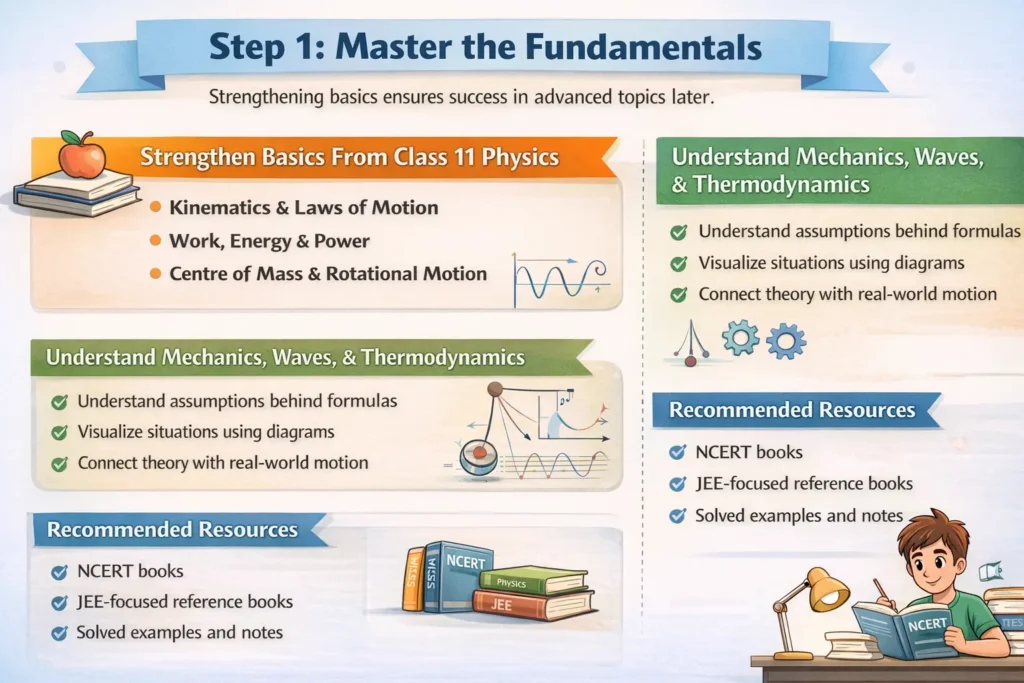
Many students feel left behind in JEE Physics because the basics were rushed or partially understood earlier. JEE does not punish slow starters; it punishes weak foundations. Strengthening fundamentals first makes every advanced chapter easier to handle later.
Strengthen your basics from Class 11 Physics
Class 11 topics form the backbone of JEE Physics. Gaps here often cause confusion, even in Class 12 chapters.
Areas that need immediate attention:
- Kinematics and Laws of Motion
- Work, Energy, and Power
- Centre of Mass and Rotational Motion
A strong grasp of these topics improves accuracy and reduces fear of lengthy calculations.
Focus on understanding concepts like Mechanics, Waves, and Thermodynamics
These chapters test conceptual clarity more than formula memory. Questions often combine ideas from multiple subtopics.
What helps:
- Understanding assumptions behind formulas
- Visualising physical situations using diagrams
- Connecting theory with real-world motion and energy flow
This approach builds long-term clarity instead of short-term memorisation.
Recommended resources for refreshing fundamental Physics concepts
Refreshing basics does not mean starting from scratch. The right resources make revision efficient.
Effective options include:
- NCERT for concept clarity
- Select JEE-focused reference books
- Guided explanation-based notes and solved examples
Structured revision methods followed at Study with IB help students rebuild fundamentals without wasting time.
Bridge the Knowledge Gap With Smart Study Techniques
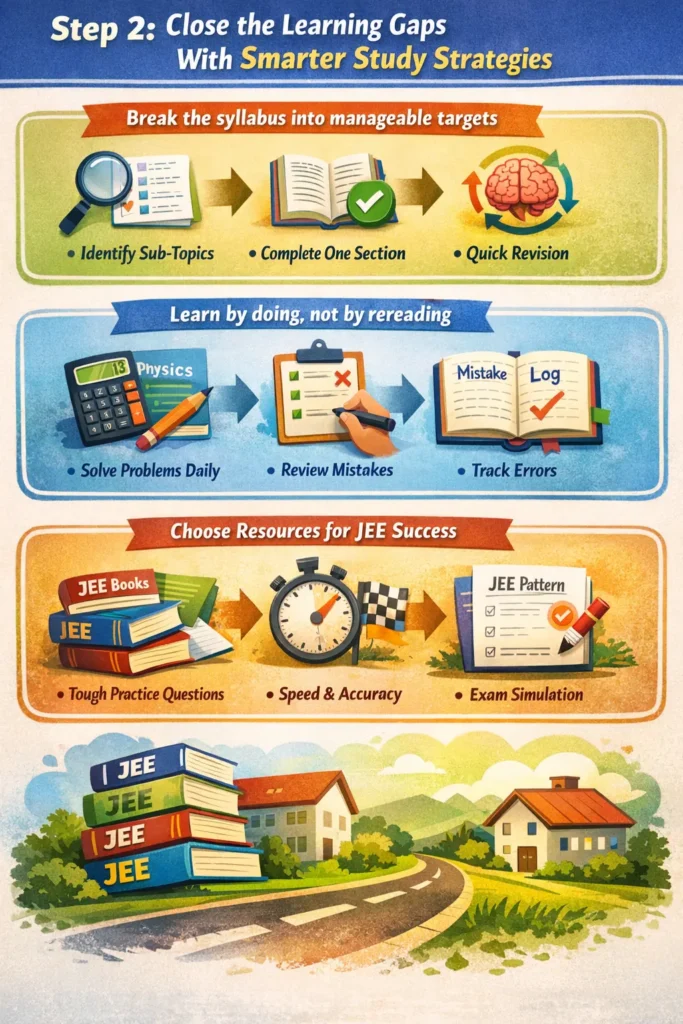
Hard work alone does not guarantee improvement in JEE Physics. The gap often exists because of how concepts are studied, not how long they are studied.
Divide and conquer: Tackle difficult chapters one at a time
Trying to study everything together creates overload. Breaking chapters into smaller sections improves focus and retention.
A practical method:
- Split chapters into logical subtopics
- Study one subtopic deeply before moving ahead
- Revise immediately after completion
This method reduces anxiety and builds steady momentum.
Active learning: Practice problems, not just theory
Reading creates familiarity, but problem-solving creates mastery. JEE rewards application, not recognition.
Effective active learning habits:
- Solve mixed problems daily
- Analyse incorrect answers carefully
- Maintain a mistake log for revision
This approach directly improves confidence and exam readiness.
Use JEE-specific textbooks and study materials for better preparation
Board-level books explain concepts but rarely train students for complex applications.
JEE-oriented material helps by:
- Introducing multi-concept questions
- Improving speed and decision-making
- Aligning practice with actual exam patterns
Choosing quality resources over quantity avoids confusion and repetition.
Step 3: Effective Time Management
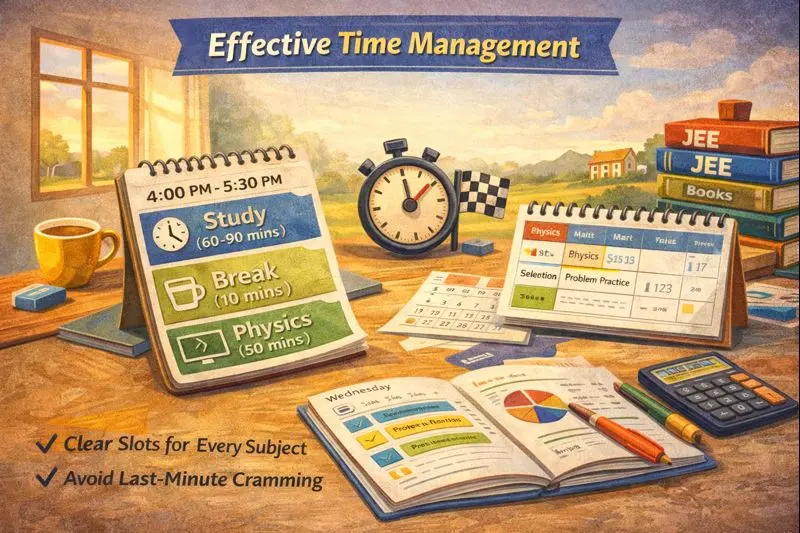
Many students associate Physics with long, exhausting study hours. In reality, consistent and structured time management delivers better results than extended sessions.
Break your study sessions into manageable chunks for Physics
Long sessions reduce concentration and increase errors.
A productive structure includes:
- 60–90 minute focused study blocks
- Short breaks for mental reset
- One session for theory, one for numericals
This improves retention and reduces burnout.
Create a schedule that allows time for revision and practice
Studying without revision leads to forgetting. Revision converts effort into performance.
A balanced schedule includes:
- Daily problem-solving time
- Weekly revision slots
- Monthly cumulative revision
This keeps concepts fresh and exam-ready.
Allocate specific time slots for Physics and other subjects to maintain balance
Ignoring other subjects creates pressure later. Balanced preparation keeps confidence stable.
Clear subject-wise slots prevent:
- Over-dependence on one subject
- Last-minute syllabus panic
- Mental fatigue
Step 4: Strengthen Problem-Solving Skills

JEE Physics is less about knowing formulas and more about knowing how to think. Problem-solving skills improve only through structured practice and reflection.
How to approach numerical problems in JEE Physics
A systematic approach reduces silly mistakes.
Key steps:
- Read the question carefully
- Draw diagrams wherever possible
- Identify known and unknown variables
- Apply formulas logically, not blindly
This method improves accuracy even under time pressure.
Building confidence through mock tests and practice papers
Mock tests simulate real exam stress and expose weak areas early.
Benefits of regular testing:
- Better time management
- Improved question selection
- Reduced exam anxiety
Mastering JEE Physics formulas and applying them effectively
Formulas work best when their origin and limitations are understood.
Better formula usage comes from:
- Learning basic derivations
- Understanding when a formula applies
- Avoiding mechanical substitution
This separates average scores from strong performance.
Step 5: Stay Consistent and Track Progress
Improvement in Physics is gradual. Consistency ensures that small daily efforts compound into significant results over time.
The importance of regular revision and practice
Revision prevents loss of previously learned concepts and improves long-term retention.
Effective revision habits:
- Weekly concept review
- Error-based revision
- Mixed-topic problem practice
Setting realistic goals and tracking progress
Unrealistic goals often lead to frustration. Measurable targets keep preparation grounded.
Progress can be tracked through:
- Chapter-wise test scores
- Accuracy percentage
- Time taken per question
How to stay motivated and avoid burnout during the preparation
Burnout usually comes from pressure, not workload.
What helps:
- Planned breaks
- Clear short-term goals
- Guided preparation under experienced mentors like IB Sir
At Study with IB, structured learning and regular assessments help students maintain consistency as they prepare for JEE through focused physics coaching in Kolkata.
The Most Common Mistakes Students Make During the Transition Phase
| Common Mistake | Why It Happens | How It Affects JEE Physics Preparation | What Works Better |
| Studying longer instead of studying smarter | Students assume more hours mean better results | Leads to burnout without improvement in accuracy | Short, focused study sessions with daily problem-solving |
| Ignoring Class 11 fundamentals | Pressure to “finish the syllabus” quickly | Weak basics make advanced problems confusing | Revisiting Mechanics and basic concepts first |
| Relying only on ICSE/CBSE textbooks | Comfort with familiar books | Lack of exposure to application-based questions | Using JEE-oriented study material alongside NCERT |
| Memorising formulas without understanding | Board exams reward direct application | Inability to apply formulas in mixed questions | Learning derivations and logical application |
| Avoiding difficult chapters | Fear of losing confidence | Creates permanent weak areas in the syllabus | Breaking tough chapters into smaller parts |
| Skipping regular revision | Focus on new topics only | Concepts fade, errors repeat in tests | Weekly revision and error analysis |
Consistency Is the Real Game-Changer in JEE Physics
Transitioning from ICSE or CBSE to JEE Physics becomes manageable with the right strategy and disciplined execution. Strengthening fundamentals, adopting active learning, managing time smartly, and tracking progress consistently form a reliable roadmap for improvement.
With the right guidance, the transition to JEE Physics becomes smoother. At Study with IB, students learn under IB Sir through focused physics coaching in Kolkata that builds strong fundamentals and steady exam confidence.
Join Study with IB for more guidance. Call +91 9474114212 today for admission-related queries.
People Also Ask (FAQs)
- How to bridge the gap between ICSE and JEE Physics?
By strengthening fundamentals, practising application-based problems, and using JEE-specific resources. - Why is JEE Physics difficult for CBSE students?
Because it tests conceptual depth and reasoning rather than direct theory questions. - How long does it take to adjust to JEE Physics?
With structured preparation, noticeable improvement appears within 6–8 weeks. - Which topics should be prioritised first for JEE Physics?
Mechanics, basic Thermodynamics, and Electrostatics. - Is coaching helpful for the transition to JEE Physics?
Guided coaching supports structured learning, resolving doubts, and monitoring progress