Are you going to appear for JEE 2026? Then this blog is for you.
As the JEE 2026 exam approaches, students are fine-tuning their preparations for one of the toughest engineering entrance exams. With the new changes in the JEE Physics syllabus, many students are wondering if their current preparation is on track.
At Study with IB, IB Sir ensures that every student stays aligned with the new focus areas, guiding them on the right path to success.
Through this blog, let’s explore what’s different about the Physics exam this year and how you can align your preparation with the new focus areas.
JEE Main 2026 Physics Syllabus – What You Must Cover
To stay on top of your preparation, it’s important to know which chapters from the JEE Main 2026 Physics syllabus you should focus on.
Let’s break down what you need to cover for both Class 11 and Class 12 Physics topics.
Class 11 Physics Topics That Build the Foundation
Class 11 Physics forms the bedrock of your understanding and sets the stage for the more complex topics in Class 12.
Some of the chapters that form the foundation include:
- Mechanics (Laws of Motion, Work, Energy, and Power)
- Waves and Sound
- Thermal Physics (Heat and Thermodynamics)
These topics are essential as they lay the groundwork for understanding more advanced concepts.
Class 12 Physics Topics That Carry Higher Weightage
Class 12 topics often carry more weight in the JEE exam, so focusing on them is crucial. Some high-weightage chapters for JEE 2026 include:
- Modern Physics (Photoelectric Effect, Nuclear Physics)
- Electrodynamics (Electrostatics, Current Electricity)
- Optics (Ray and Wave Optics)
Make sure you pay extra attention to these chapters, as they form the crux of JEE Main Physics questions.
High-Weightage Physics Chapters You Should Prioritise
Knowing which chapters carry the most weight in JEE 2026 Physics can give you an edge during your preparation.
Here are the chapters you should prioritise:
Modern Physics and Semiconductor Devices
Modern Physics is one of the most important and scoring areas for JEE. Topics like the photoelectric effect, atomic models, and semiconductor devices carry high weightage and are frequently asked.
Current Electricity and Electrostatics
Current Electricity and Electrostatics are key chapters that account for a significant portion of JEE Physics. Be sure to master concepts like Ohm’s Law, Kirchhoff’s Laws, and Coulomb’s Law for scoring well in these sections.
Optics – Ray Optics and Wave Optics
Optics is a major chunk of JEE Physics, and it’s crucial to get a solid grasp on both Ray Optics (like lenses, mirrors) and Wave Optics (interference, diffraction). This chapter is known for its application-based questions, making it essential to focus on the ray optics JEE Main important questions. This will strengthen your understanding and improve your problem-solving skills.
Heat and Thermodynamics
Heat and thermodynamics are essential topics in JEE Physics, so it is important not to overlook them. Focus on understanding the laws of thermodynamics, the concept of entropy, and the working of heat engines to build a strong foundation for solving related problems in the exam.
Mechanics – Why Skipping Basics Hurts Later
Mechanics forms the foundation for many other advanced topics in JEE Physics. If you skip this, you might face difficulty later in the exam. Understand topics like motion, work-energy, and rotational dynamics thoroughly.
To master these high-weightage chapters and excel in JEE 2026 Physics, consider guidance from Study with IB, a Physics coaching centre for JEE in Kolkata, where IB Sir provides the ultimate guide to good results.
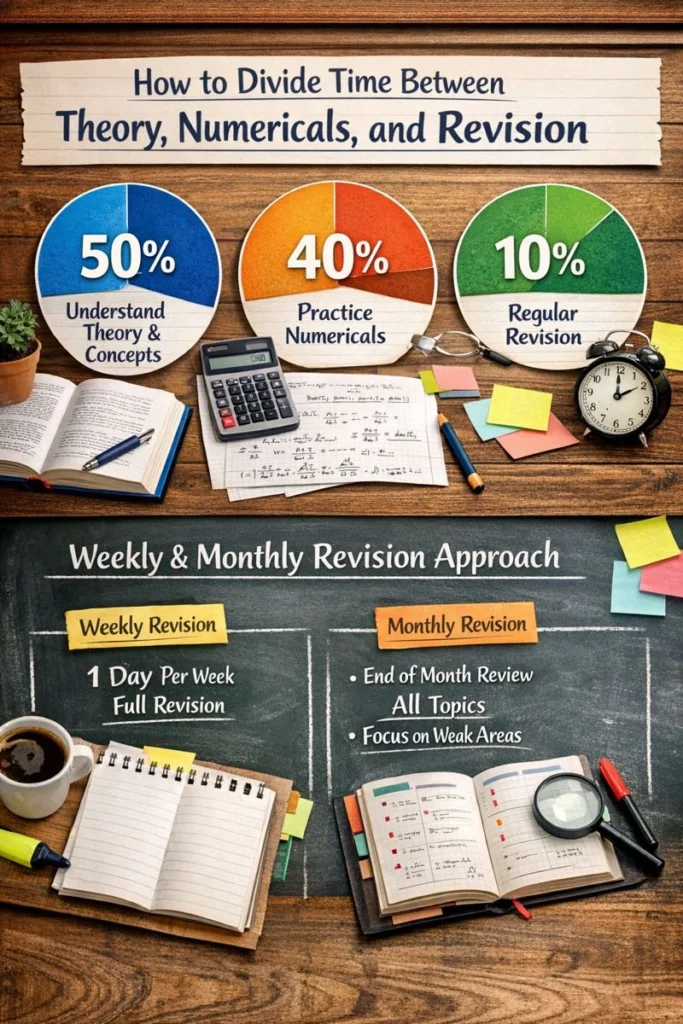
A Proper Study Plan for JEE 2026 Aspirants
A proper study plan is essential to keep your preparation on track. Here’s how you can divide your time effectively.
Common Preparation Mistakes to Avoid
Every student makes mistakes during preparation, but here are a few you should avoid at all costs.
Studying Chapters in Isolation
Don’t study chapters in isolation. Physics is all about interlinking concepts. Understand how one topic leads to another.
Ignoring Weak but Scoring Topics
While it’s natural to focus on your strengths, don’t ignore weaker but scoring topics. Revise them regularly to improve your overall score.
Delaying Revision and Test Practice
Delaying your revision and practice tests can hurt your preparation. Stick to a regular revision schedule to stay up to date on key topics.
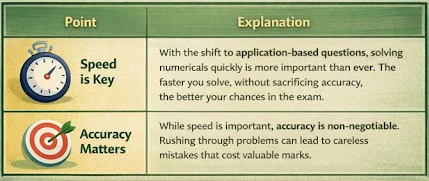
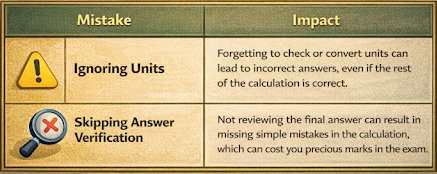
The Growing Importance of Numerical-Based Questions
JEE Physics has always been about numericals, but now the questions are designed to challenge your calculation speed and accuracy.
Here’s what you need to know:
Why Calculation Speed Matters in JEE Physics
Common Mistakes Students Make in Numericals
Why JEE 2026 Physics Feels Different From Previous Years
The JEE exam is always evolving, and each year, the focus shifts slightly to meet the changing needs of the education system.
Here’s what you need to know about the new changes in JEE 2026 Physics:
Shift from Formula-Based to Application-Based Questions
“So, what’s actually different this year?
You have always been told to memorise formulas and just plug numbers into them during the exam.
In the past, many JEE Physics questions were formula-heavy, requiring students to memorise equations and plug in numbers. But for JEE 2026, the focus is shifting.
Now, it’s more about understanding the concepts behind the formulas and knowing how to use them in real-world situations.
You’ll be tested on how well you understand the principles of Physics and how you can apply them to solve complex problems, not just plug in random values.
Increasing Importance of Conceptual Clarity and Numericals
Getting confused about how to tackle formulas?
While formulas are still important, the focus is now on building a strong conceptual understanding. In JEE 2026, you’ll see more numericals based on concepts, requiring deeper understanding and logical reasoning.
This shift highlights the importance of conceptual clarity and the ability to apply this knowledge effectively to solve problems.
Is Your Physics Preparation Really Aligned?
It’s easy to get lost in the vast amount of topics to cover for JEE 2026 Physics, but is your preparation on the right track?
Here’s how you can assess it:

Role of PYQs and Mock Tests in JEE Physics
Previous Year Questions (PYQs) and Mock Tests are invaluable tools for JEE preparation.
- Familiarise Yourself with the Exam Pattern
PYQs give you a clear idea of the question format and the topics most frequently asked, preparing you for what to expect on exam day.
- Focus on Important Topics
PYQs help you identify high-weightage chapters, allowing you to focus your study time where it counts.
- Practice Real Exam Conditions with Mock Tests
Mock tests simulate real exam pressure, helping you improve time management and get comfortable solving problems under timed conditions.
- Track Your Progress
Both PYQs and mock tests help you assess your strengths and weaknesses, enabling focused improvement.
- Build Exam-Day Confidence
Regular practice helps reduce stress and boosts confidence, making you feel more prepared for the actual exam.
Preparing Smart for JEE 2026 Physics
JEE 2026 Physics demands more than just studying for longer hours. It requires smart preparation, a solid strategy, and expert guidance.
Having the right guidance from experts like IB Sir at Study with IB, a Physics coaching centre for JEE in Kolkata, can make a significant difference. Call at + 91 9474114212 today.
People Also Ask (FAQs)
1. Is JEE Advanced 2026 going to be tough?
Yes, JEE Advanced 2026 will be challenging with higher-level questions.
2. What are the new changes in JEE Mains 2026?
More application-based questions with increased emphasis on conceptual understanding.
3. What is the most important chapter in JEE 2026?
Modern Physics, Electrostatics, and Mechanics are high-weightage chapters for JEE 2026.
4. Is NCERT enough for JEE Mains 2026?
NCERT is essential, but it needs additional reference material for JEE preparation.